.jpg)
The rupee has avoided the heavy losses suffered by some emerging Asian currencies such as the Philippine peso this year because of its efforts to narrow the current account deficit, and strong foreign investor inflows.
The cost of holding one-year forward dollars rose to 482.75 basis points from 472.75 bps on Tuesday.
The rupee was largely rangebound for most of the trading day in the absence of any major cues ahead of the Reserve Bank of India's rate-setting meeting next week.
.jpg)
In New York, the US dollar gained against most rivals on last Friday, as a week of data reassured investors that December's dismal employment report wasn't indicative of a broader shift in the economy.
New York's main contract, West Texas Intermediate for February delivery, was up 22 cents at USD 98.64 in mid-morning trade while Brent North Sea crude for February rose 17 cents to $ 110.97.
It fell 11 per cent in 2013, its third successive annual loss.
.jpg)
Traders say the outlook for the rupee has improved on the back of a sharp narrowing in the current account deficit after government and central bank emergency measures such as curbing gold imports.
The currency's relatively stable performance even as the US announced tapering showed India's better preparedness to deal with any fallout of such foreign fund outflows.
.jpg)
Dealers cited some dollar selling by state-run banks in the session, which some said may be on behalf of the central bank.
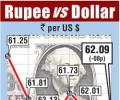
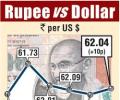
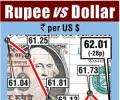
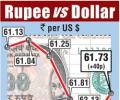
The partially convertible rupee closed at 62.09/10 per dollar compared with Tuesday close of 62.01/02, a fifth day of losses out of six.
The RBI is widely expected to raise its key repo rate by 25 basis points to 8.00 per cent on Wednesday, its third such hike in four months after recent data showed both wholesale and retail inflation at multi-month highs.
Forex dealers said besides a lower opening in the domestic equity market on fears of a rate hike by the Reserve Bank, higher demand for the American currency from importers put pressure on the rupee but dollar's weakness against other currencies overseas, capped the fall.
Policymakers have been grappling with high prices for food staples such as onions and potatoes even after the central bank raised interest rates by a quarter percentage point in each of its previous two reviews.
.jpg)
RBI chief Raghuram Rajan said on Thursday he was 'very uncomfortable' with the inflation reading, a comment that probably seals the case for him to deliver his third rate increase next Wednesday, despite a weak economy.

Data earlier on Thursday showed the annual consumer price inflation rose to a higher-than-expected 11.24 per cent in November from 10.17 per cent in October.

The country's merchandise deficit narrowed to $9.2 billion in November, but exports growth eased to 5.9 percent from 13.5 percent in October, government data showed.
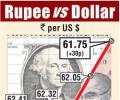
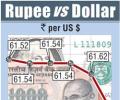
The rupee resumed higher at 61.75 as against the last closing level of 62.05 per dollar at the Interbank Foreign Exchange (Forex) Market and firmed up further to a one-month high of 61.53 before quoting at 61.59 per dollar at 1045 hours.
.JPG)
The gains in the rupee masked a rising sense of caution across markets ahead of the results of elections in several states. Delhi was the latest to hold assembly elections on Wednesday.

The deficit data was the latest in a run of positive signs for the sluggish domestic economy and could put India in a better position should the Fed start tapering, than in the summer when the rupee hit a record low.
.jpg)
The rupee was last at 62.05/06 after gaining to as high 61.9650 against the dollar, its highest since Nov 19. It had closed at 62.44/45 on Friday.
 © 2026 Rediff.com - Investor Information - Advertise with us - Disclaimer - Privacy Policy - Sitemap - Feedback - About us - Terms of use - Grievances